 Clothoo
When the weather starts to flip, lightweight vs heavyweight varsity jackets for fall and winter can feel like a confusing choice, and many buyers only see a wall of varsity jackets without knowing how fabric, lining, and rib knit change how warm they feel in October or in deep January cold.

Think about how cold your fall and winter really are
Before you look at materials, think about your actual school year. A student in Georgia has a very different season than a student in Michigan. The jacket that feels perfect on a cool Friday night in one place might feel too thin or way too hot in another.
Also think about where you spend time. Standing in a windy student section or waiting for a bus is not the same as walking from parking lot to class. If you are outside for long stretches, you need more insulation than someone who spends most of the day inside and only walks across campus for a few minutes at a time.
Clothoo builds many kinds of school and team varsity jackets, from lighter cotton and fleece styles to thick wool and wool-leather builds. Choosing between lightweight vs heavyweight varsity jackets for fall and winter starts with this honest look at your weather and routine.
What counts as a lightweight varsity jacket vs a heavy one
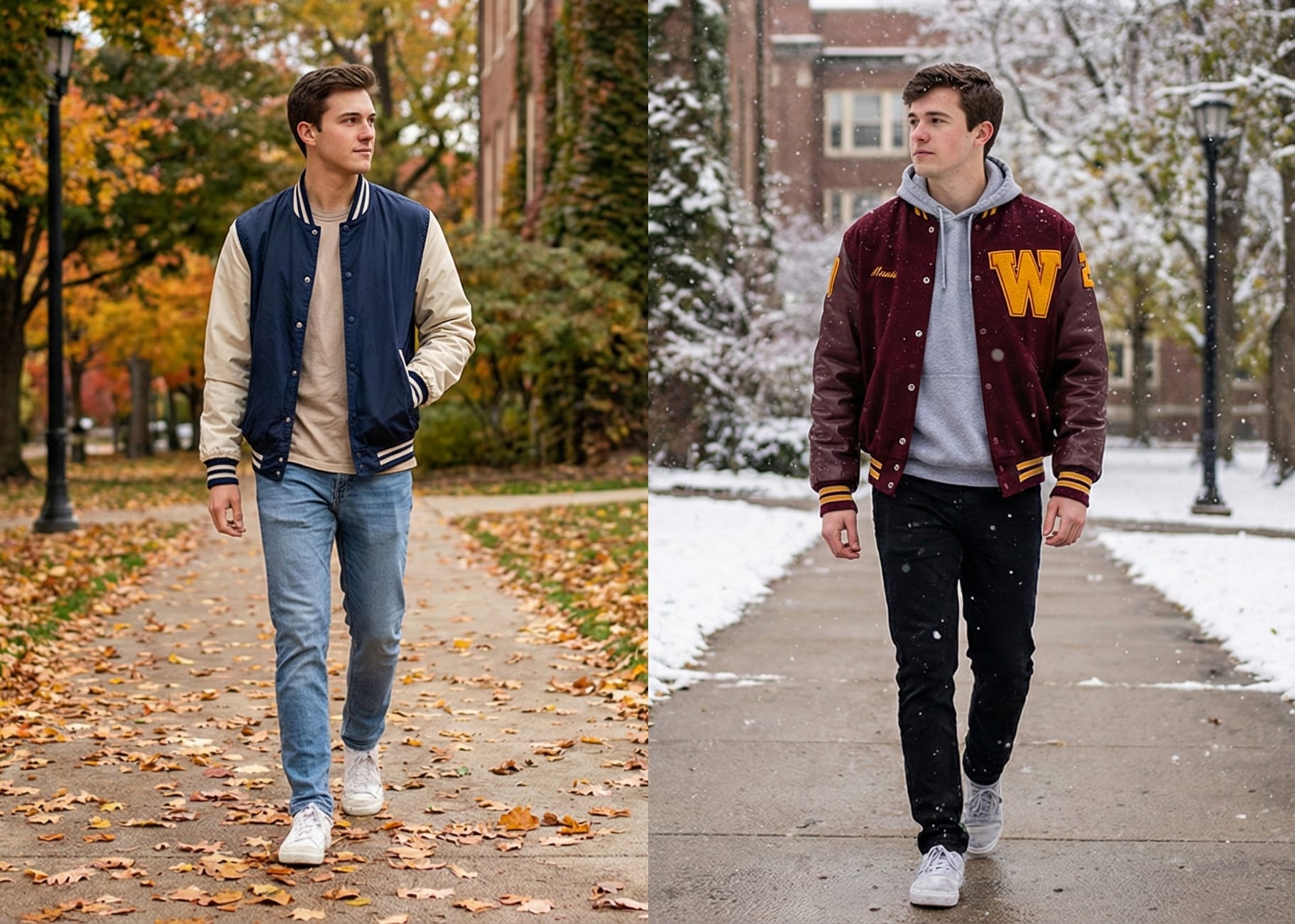
Lightweight jackets use softer, thinner fabrics and less insulation. They still block wind and feel solid, but they do not trap heat the way heavy wool does. These are the pieces you grab in early fall or mild winters where temps dip but do not stay below freezing for long.
Common lighter builds include cotton fleece bodies, cotton twill, and satin or nylon shells. Many of these come with a simple lining or no extra insulation at all. They are easy to move in, easy to stuff in a backpack, and comfortable in classrooms that already run warm.
In short, a light varsity jacket works when:
- Your fall days are cool, not freezing, and winters are short or mild.
- You mostly walk from car or bus to class and sit indoors.
- You like wearing hoodies under your jacket without feeling weighed down.
- You want that classic look without a thick, heavy shell.
If you are curious about how cotton, fleece, satin, and other lighter fabrics look in real life, you can check the options on the materials and colors guide while you plan your jacket.

What makes a varsity jacket heavyweight for deep cold
Heavyweight jackets use thick fabrics and more insulation. They are built for cold stands, bus stops, and long walks across icy parking lots. When people picture a classic “old-school letterman,” they often picture this kind of construction.
The most common heavy builds use a dense wool body with leather sleeves, or all-wool from top to bottom. Inside, a quilted or padded lining adds another layer of warmth. Strong rib-knit cuffs, collar, and hem seal in heat and block wind from sneaking in at the edges.
These jackets shine when temperatures sit near or below freezing for long stretches, snow is normal in your town, and games often run late into cold nights. In that case, a thick wool style, like the pieces in Clothoo’s wool varsity range or wool-leather combinations, makes more sense than a light shell.
In very cold states, many students treat their heavy jacket as their main winter coat. They wear it over hoodies and flannels and rely on the lining plus rib knit to trap body heat during long nights in the stands.
Lined vs unlined varsity jackets and how much warmth they add
Lining can change how a jacket feels almost as much as the outer fabric. A thin cotton body with a quilted lining can feel warmer than a plain wool shell with no lining at all. That is why it is important to think about what is inside, not just what you see on the outside when you compare thin vs thick varsity jacket builds.
Most school jackets fall into three basic lining levels:
| Jacket type | Typical lining | Warmth level | Best use |
|---|---|---|---|
| Lightweight (cotton, fleece, satin) | Unlined or light woven lining | Low to medium | Mild fall days, short winter walks, warm classrooms |
| Midweight (cotton or wool mix) | Simple quilted or padded lining | Medium | Cool fall nights, early winter games, mixed indoor/outdoor days |
| Heavyweight (thick wool, wool-leather) | Full quilted lining, dense rib knit | High | Cold winters, snowy states, long time outside in the stands |
Rib-knit cuffs, collar, and hem also matter. Tight, dense rib knit acts like a seal at your wrists, neck, and waist. It keeps warm air in and cold air out. Looser knit feels more casual but can let drafts in when the wind picks up.
Common mistakes when picking jacket weight
A few simple errors show up again and again when people pick weight. Knowing them now makes it easier to choose the right varsity jacket insulation level the first time.
- Choosing only by style and school colors without checking fabric and lining.
- Picking a very heavy wool shell for a warm climate and then feeling too hot in class.
- Going with a thin, unlined jacket in a snowy state and ending up cold at every game.
- Ignoring rib-knit cuffs and collar, which can make a light jacket feel much warmer.
- Forgetting about wind on open fields, where a lined jacket works better than a bare shell.
As you compare builds, you can use real examples from the varsity jacket collection and material notes in the fabric and color guide to avoid these common issues.
Quick weight guide for light vs heavy varsity jackets in fall and winter
If you want a fast way to match light vs heavy varsity jacket weight to your climate, this simple guide can help. It is not a strict rule, but it gives a solid starting point for most U.S. regions.
| Season & climate | Recommended weight | Typical build | Notes |
|---|---|---|---|
| Fall in mild states | Lightweight | Cotton fleece, cotton twill, light satin shell | Great for cool mornings and evenings, easy in class and hallways. |
| Late fall and cool winters | Midweight | Fleece or wool blend with simple quilted lining | Better for windy games and longer walks, still okay indoors. |
| Cold, snowy winters | Heavyweight | Thick wool or wool-leather with full lining | Best for snow, icy bus stops, and long nights in the stands. |
If your school sits in a place with wild swings, you might even use two builds over four years: a lighter jacket early on and a thicker wool piece later. Looking across Clothoo’s wool varsity styles and wool-leather options can help you see which ones line up with your coldest months.

Simple path to choose your varsity jacket weight
A small decision path can make the lightweight vs heavyweight varsity jackets for fall and winter choice feel less abstract. Think about how you dress now and how often you stand in real cold, then follow that signal.
If your winters are mild and you mostly wear tees or light hoodies, a lighter or midweight shell should be enough. Pick a cotton, fleece, or satin build with a simple lining, then rely on layers when the air dips for a week or two.
If your falls are cool but your winters stay below freezing, treat the jacket like a true winter coat. A thick wool or wool-leather style with quilted lining and snug rib knit is the better pick. You can always open the snaps or wear a thin tee on warmer days.
If you are in between, or your schedule swings between warm classes and cold stands, lean toward midweight. That type is easier to wear all day. You can add a hoodie under it when you head out to night games and still stay comfortable in the hallway.
Once you decide where you land in the lightweight vs heavyweight varsity jackets for fall and winter question, you can look at fabrics and builds in the varsity jackets and test color combos and details in the design-your-own builder. A little thought now means your jacket feels right every time you grab it off the hook.

FAQs about varsity jacket weight and warmth
Q: What is the difference between lightweight and heavyweight varsity jackets?
A: Lightweight styles use thinner fabrics like cotton, fleece, or satin with little or no insulation, so they feel easy and flexible in mild weather. Heavyweight builds use thick wool and wool-leather with quilted lining and dense rib knit, so they trap more heat and block cold wind.
Q: Is a heavyweight varsity jacket too warm for fall?
A: In mild states, a very heavy wool jacket can feel hot in early fall, especially indoors. In cooler regions, it can still work in late fall and early winter. If your fall days are mostly comfortable in a hoodie, a lighter or midweight jacket is usually a better match for that season.
Q: What weight varsity jacket do I need for snowy states?
A: In places with real snow, icy sidewalks, and long cold snaps, a thick wool or wool-leather jacket with full quilted lining is the safest choice. Pair it with good rib-knit cuffs and collar so it seals in warmth while you stand in the stands or wait for rides.
Q: Do I need a lined varsity jacket for winter?
A: For true winter weather, some level of lining is important. A quilted or padded lining adds warmth and blocks wind better than an unlined shell. In very cold areas, an unlined jacket on its own is unlikely to be enough for long outdoor events.
Q: How can I see real fabric and color options before I decide?
A: You can review outer fabrics, linings, and trim shades on Clothoo’s materials and colors page. Then, browse the range of varsity builds and test looks in the online builder before you confirm which weight fits your fall and winter.


 Clothoo