 Clothoo
When you plan gear for the season, varsity jackets for baseball and football teams have to work in dugouts, on sidelines, and on campus, not just in photos of varsity jackets hanging on a rack.


Start with how your team will use its jackets
Before you pick colors or patches, think about where your players will actually wear these pieces. Baseball jackets spend time in dugouts and bullpens. Football jackets live on windy sidelines and cold bleachers. Both sports also use them for school days, travel days, and team events.
If your roster spends long nights outside late in the season, you may want a thicker build. If most games wrap before it gets very cold, a lighter option can be fine. You also have to decide if these will ever go over gear, or if they only go over hoodies and tees after uniforms come off.
Clothoo’s main team jacket lineup covers lighter shells and heavier wool and wool-leather builds, so you can match the jacket to how your baseball or football group really plays and travels.
Baseball varsity jackets for dugouts and travel
Baseball seasons stretch across cool spring evenings and early fall. Players move arms in a full arc to throw and hit, so jackets for the diamond need room in the shoulders and sleeves. At the same time, you do not want a lot of bulk when athletes lean on rails, sit on benches, or jog out for warmups.
Good baseball varsity jackets feel easy in the dugout and on the walk from the bus to the field. They keep players warm between innings but let them shrug the jacket off fast when their name is called.
Motion and sleeve shape for baseball players
Look for builds that leave space through the shoulder and underarm without feeling huge in the body. A raglan or set-in sleeve with smart shaping gives pitchers and fielders the range they need when they throw. Rib-knit cuffs keep sleeves off the hands so players can grip bats and gloves.
- Choose a body weight that works for cool nights without overheating between innings.
- Make sure sleeve shape leaves room for full throwing motion and stretch.
- Pick a lining that adds some warmth in the dugout but still feels light on bus trips.
- Use player numbers, positions, or small bats-and-balls icons on sleeves for quick ID.
For colder regions or late playoff runs, you can look at thicker wool and wool-leather builds in the wool and leather collection. In warmer states, lighter builds from the main baseball-ready range can handle most early and mid-season games.

Football letterman jackets for cold sidelines
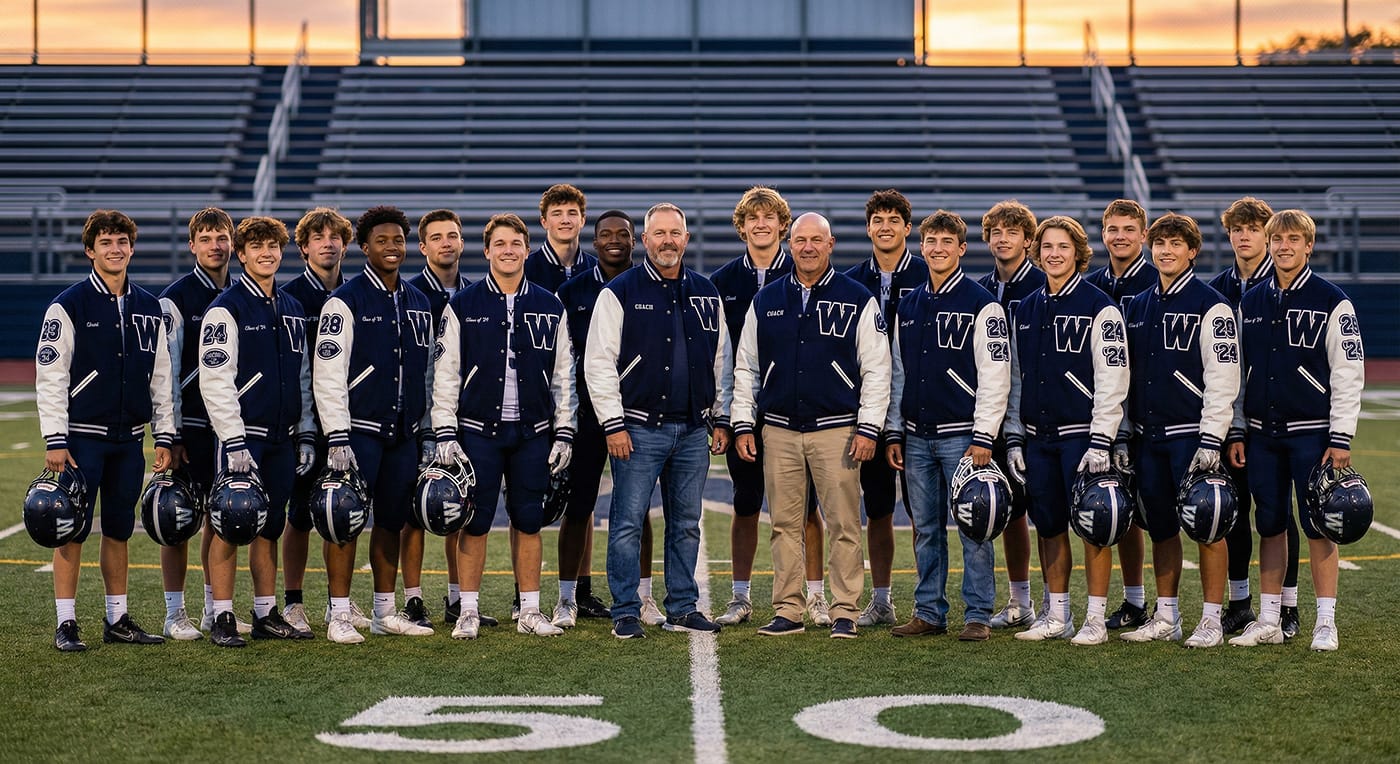
Football coats a season in cold air, late kickoffs, and long bus rides home. Football letterman jackets should feel more like real outerwear. They need enough insulation for players, managers, and fans who stand on the track or grass for hours.
Here, thicker wool bodies and leather sleeves shine. A quilted lining and snug rib-knit cuffs and collar help block wind that blows across open fields. These builds often become the main cold-weather piece that players grab all winter, not just on game nights.
Player vs coach versions on game night
Players do not usually wear jackets over pads during snaps, but they may throw them on over uniforms between series. For them, a roomier cut in the shoulders and chest helps. Some schools size player pieces slightly larger so they can slide over gear if needed, then still work over hoodies on campus later.
Coaches and coordinators need a different feel. They move up and down the sideline, hold clipboards or tablets, and wear headsets. A slightly trimmer coach version of the same design keeps arms free and avoids extra bulk around the waist. Many programs choose the same colors and patches for staff, but adjust fit to match how adults move during games.
You can explore heavy-duty options that work well for football climates inside Clothoo’s wool-leather lineup, then match them to the wider school jacket collection for lighter states.

Patches and details that matter to sports teams
The build keeps your team warm, but the patches tell your story. Baseball and football groups often want more than a basic letter and name. The right details connect the jacket to positions, stats, and wins without turning it into a cluttered wall.
Common sports layouts include a large school letter on the chest, with name and role on the other side. Sleeves carry numbers and years. The back holds team names, mascots, or “Conference Champs” style marks.
- Use player numbers on sleeves or back so fans can link jackets to on-field roles.
- Add short position tags like QB, RB, WR, P, or C in smaller patches near the chest.
- Mark big titles, rivalry wins, or state runs with clear championship patches.
- Include coach titles, coordinators, and manager roles on staff jackets.
You can review patch styles, chenille shapes, and embroidery options on Clothoo’s patches and embroidery overview and then plug them into your plan for both sports.
Sizing and ordering jackets for a whole roster
Once you know which type of jacket fits each sport, you still have to size and order for a full baseball lineup and a full football roster. That can mean dozens of players, plus coaches, managers, and even band or cheer if you want one unified look.
Start by deciding if all groups will wear the same base design or if baseball and football will have slightly different jackets. A shared school look keeps things simple and helps with group pricing. Sport-specific details can live in sleeve patches or back layouts.
Next, plan how each person will wear the piece. If football players may wear jackets over gear at times, their sizes may need more room. Baseball players might prefer a closer cut that feels better over hoodies and travel outfits. Coaches and staff often like a comfortable regular fit that works with polos and pullovers.
Clothoo makes unisex sizes from XS to 6XL, so one design can cover freshmen, linemen, pitchers, and head coaches. For large mixed groups, it helps to work with the team at Clothoo through the wholesale and team order details, then match that guidance to styles in the varsity jacket collection.
A simple roster sheet with names, roles, and sizes keeps ordering clean. Once your list is set, you can lock your design in the builder, send one clear order, and let the jackets move from the screen to real dugouts and sidelines.

FAQs about baseball and football team jackets
Q: What kind of varsity jackets do football teams wear?
A: Many football programs use thick wool or wool-leather builds with quilted lining and snug rib knit so players and coaches stay warm on windy fields. These jackets often become the main cold-weather layer for the whole team.
Q: What is a good varsity jacket for baseball dugouts?
A: A good baseball piece leaves room in the shoulders and sleeves for throwing, adds enough lining for cool nights, and stays light enough to pull on and off between innings. It should feel easy on the bench and on travel days.
Q: Should coaches wear the same varsity jacket as players?
A: Many schools use the same design for staff and athletes so the group looks united. Coaches often choose a slightly different fit, with room for layers but less bulk around the waist so they can move and work on the sideline or in the dugout.
Q: How do we size varsity jackets for a whole team?
A: Start with a size chart, then think about how each sport will wear the piece. Football players may need more room for layers or gear, while baseball players might want a trimmer feel. Use unisex sizes across XS–6XL and keep one clear list for players, coaches, and managers when you place a group order.


 Clothoo