 Clothoo
When you start planning a school jacket, you quickly run into types of patches for varsity jackets chenille vs embroidery and have to decide which look fits your letters, logos, and numbers, and the way jacket patches and embroidery are built makes a big difference in how your design reads from the stands or the hallway. Once you understand what each patch style does best, it is much easier to map out a clean, long-lasting layout for your custom jacket.
Why patch type matters on a school or team jacket
A varsity jacket works like a small billboard for your school, team, or club. The base colors set the mood, but patches and stitching carry the message. A big fuzzy letter on the chest feels different from a sharp, flat logo on the sleeve or a crisp script name over the pocket.
Patch type also affects how your jacket wears over time. Some textures stand out from far away. Others are better for tight detail when you are up close in class, club photos, or team banquets. Picking the right style for each area helps your jacket stay clear, readable, and easy to recognize.
Quick look at how jacket patches are made
Most school patches fall into three main groups. Chenille uses soft yarn loops to build a raised, fuzzy surface. Flat embroidery uses tight stitched threads that hug the base fabric. Felt patches often mix a cut felt base with either chenille or flat stitching on top.
Clothoo offers all three styles so your letters, numbers, and mascots can match your design plan. You can see real examples and close-ups in the Clothoo patch and embroidery guide before you start laying out a jacket.

Close-up: chenille letter patches for varsity jackets
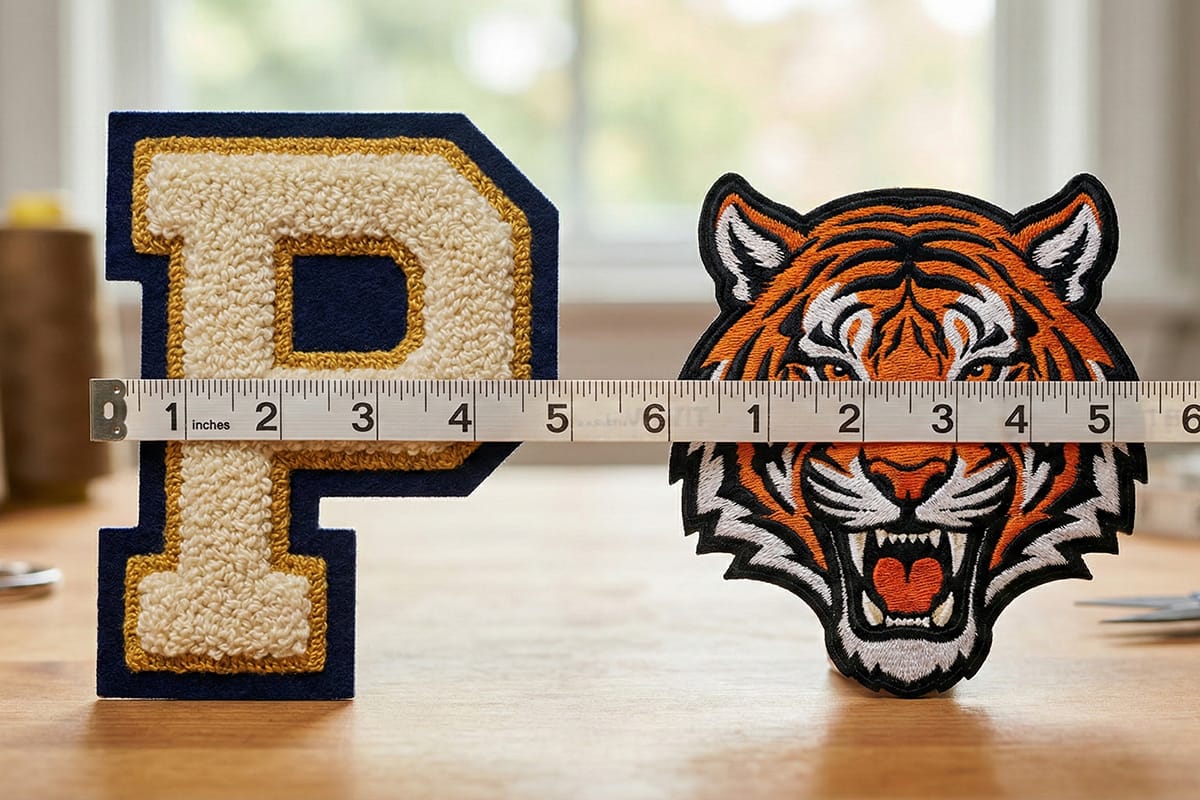
Chenille is the classic look most people picture when they hear “letter jacket.” It uses looped yarn that stands up from the felt base, which gives big letters and numbers a soft, bold surface. From the bleachers or across a hallway, that raised texture helps the shape pop.
Most chenille patches sit on a felt layer that matches or contrasts with the jacket body. You can add a narrow chain stitch border, a second felt color, or small embroidered details around the edges to frame the letter even more.
Best uses and limits of chenille
Chenille shines when shapes are simple and you need them to be seen from a distance. Think single letters, short words, and big numbers. It is also great for class years and simple awards like “MVP” or “Captain.”
- Use chenille for large front chest letters that stand for your school or team.
- Pick chenille numbers on sleeves or back yokes when you want big, bold digits.
- Add chenille award patches for sports, music, and club icons with simple shapes.
- Keep fine lines to a minimum; use chain stitch or small flat embroidery around the edges for detail.
- Pair chenille with a felt base that contrasts with the jacket body so the outline is easy to read.
Because the yarn is thick, chenille is not ideal for tiny text or very detailed mascots. When the design relies on thin lines, flat stitching will usually hold the shape better over time.

Close-up: flat embroidery and felt patches
Flat embroidery uses tight thread that sits close to the surface of the patch. It feels smooth to the touch and lets you build clean lines, small letters, and detailed logos. You can stitch directly onto the jacket or onto a felt shape that is then applied like a patch.
Felt patches often work as the base for both chenille and flat embroidery. A school may use a felt base cut to a mascot shape, then fill the main areas with chenille and add facial features, outlines, and small text with flat stitching.
When to pick flat embroidered patches for jackets
Flat embroidery is your friend when you care about detail. It handles script names, stacked text, and logos that include thin outlines. It also works well for sleeve crests, sponsor logos, or club marks that need to stay clear in photos and close-up shots.
For a clean, technical look, many schools and teams choose flat embroidery for chest names and small sleeve details, then save chenille for the main letter and numbers. You can see how Clothoo lays out these mixes in the examples on the custom jacket overview.

How to choose between types of patches for varsity jackets chenille vs embroidery
When you lay out your design, think about where people will see each patch. The front chest, back, and sleeves all do different jobs. Large areas should stay bold and simple. Smaller spots can handle fine detail and extra text.
Use chenille when the shape needs to shout. Use flat embroidery when the message needs to read clearly up close. Do not be afraid to mix both styles on one jacket if that helps each element do its job.
Fast rules for budget, detail, and distance readability
If you need a few quick rules to guide a whole order, use this checklist as you plan with your team or school:
- Think of chenille as the star piece: big letters and numbers that catch the eye first.
- Use flat embroidery for names, small words, and detailed logos that must stay sharp.
- Pick combo patches (chenille fill with embroidered outlines) for mascots that mix big shapes and small features.
- Keep very busy art small and in one area instead of spreading it across the whole jacket.
- For tight budgets, focus chenille on the main chest letter and year, then use flat embroidery on simpler spots.
- Always look at your design from across the room as well as up close before you approve it.
As you compare ideas, you can use the online jacket designer to preview how each patch style will sit on the body, sleeves, and back. The step-by-step customizing guide walks through common layouts and placement rules.

Group orders and patch planning for teams and schools
Team and class orders add one more layer to the decision. You need a layout that works for different sizes, body types, and roles while still feeling like one unified jacket.
One simple approach is to keep the main chest letter and back patch the same for everyone, then use flat embroidery for personal lines. For example, you might choose chenille for the school letter and graduation year, and flat stitching for names, positions, and small club marks.
Coaches, staff, and managers can use the same base design with small patch changes. A coach might swap a player number for a title on the sleeve, or a staff member might add a flat embroidered role under the chest letter instead of a sport icon.
Before you submit a roster, walk through the options on a call or screen share with your group so everyone sees the patch plan. The patches & embroidery detail page and the custom jackets guide page are helpful starting points when you are picking textures for a full team set.

FAQs about patch styles for varsity jackets
Q: What types of patches can I put on a varsity jacket?
A: Most school jackets use a mix of chenille letters and numbers, flat embroidered names, and felt-backed mascots. You can combine these in many ways as long as you keep big shapes simple and save fine detail for smaller areas.
Q: What is the main difference between chenille and embroidered patches?
A: Chenille builds a raised, fuzzy surface with yarn loops, which makes big shapes look bold from far away. Flat embroidery uses tight thread that lies close to the surface, which is better for clean lines, small text, and detailed logos.
Q: Are chenille patches more durable than flat embroidery?
A: Both can last for years when applied and cared for correctly. Chenille may show wear sooner on very rough use because the yarn loops can catch, while flat embroidery tends to resist snags a bit better. Following care directions helps both styles hold up.
Q: When should I choose chenille vs embroidery for my school jacket?
A: Use chenille for large letters and numbers that need to stand out at games or events. Use embroidery for names, phrases, and detailed mascots. Combo patches that mix both styles are great when you want bold shapes and sharp lines in one design.
Q: Can I change patch types between different jackets in one order?
A: Many groups keep the main layout the same and only change a few elements. For example, all players might use chenille chest letters while staff use a flat embroidered title. When you work through the varsity jacket design tool, you can test these ideas before you place your final order.


 Clothoo