 Clothoo
When you order for a school, club, or team, you end up asking about the best material for a varsity jacket wool vs fleece, and that choice gets easier once you understand real jacket materials and colors for your climate and how students actually wear these jackets. The goal is simple: pick a fabric that feels good, holds its shape, and fits the season your group lives in most of the year.
Why fabric choice matters on a varsity jacket
A letter jacket is not just a logo carrier. The body fabric sets the weight on the shoulders, the way the jacket hangs at the rib knit hem, and how it feels when a student walks from class to practice or sits on a cold bus. The wrong fabric can feel heavy in mild states or too thin in long, bitter winters.
Parents and admins often look at color first, then price. Fabric should be just as high on the list. The same school colors can sit on melton wool or on fleece and create very different jackets in real daily use.
What melton wool and fleece mean on a school jacket
Melton wool is a dense, brushed wool fabric. It feels firm and solid in the hand and has a bit of weight. Fleece is a knit fabric that feels soft and light, with a smooth inside and outside and more stretch.
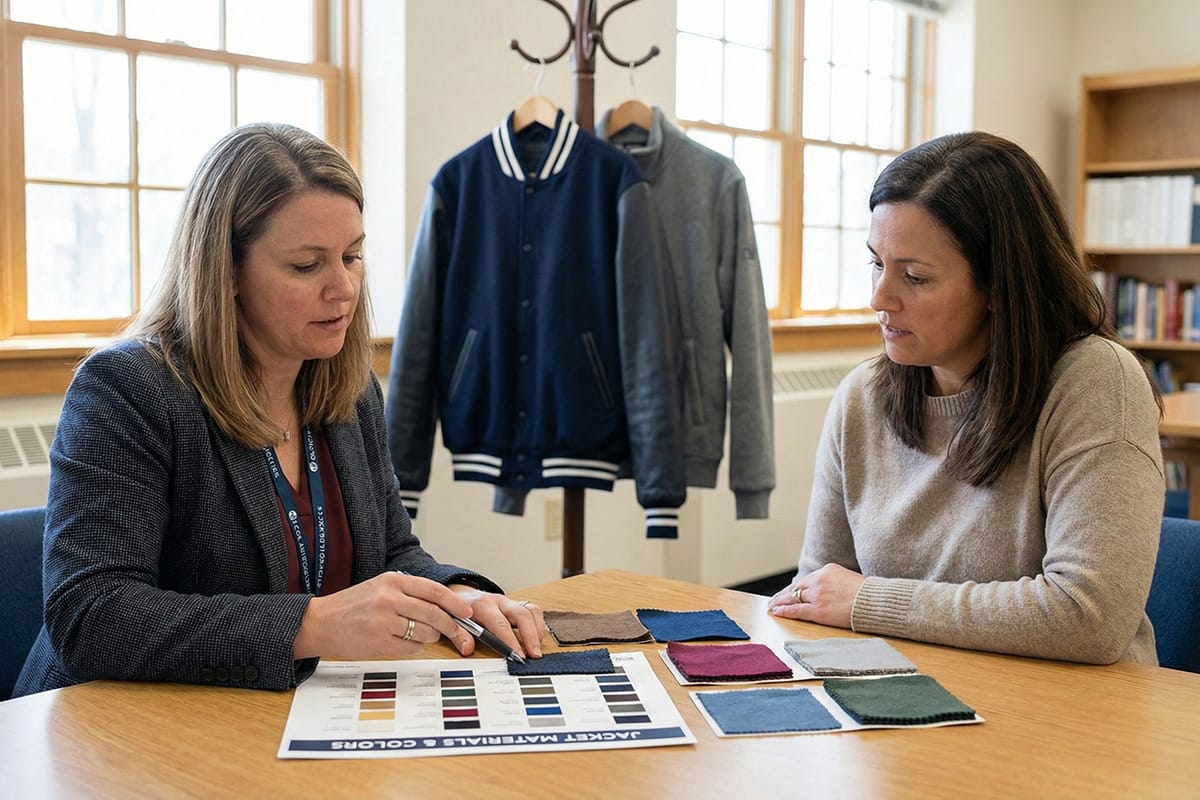
On the materials and colors page, you can see how both options look on real jackets, along with notes on lining and trims. That page is a good starting point before you decide which fabric fits your school and budget.

Wool body varsity jackets: weight, feel, and benefits
A classic letter jacket with a melton wool body feels solid and warm on the shoulders. The fabric has some weight, but it sits close to the body instead of bouncing. When lined, it traps heat against sweatshirts and hoodies, which matters on long walks across campus and late fall games.
In most builds, wool is thicker than fleece. It does not stretch much, but it holds the clean, squared-off shape people picture when they think of traditional school jackets. Rib knit cuffs and hem help keep air out at the edges.
- Weight: medium-heavy, with a firm hand that feels built for cold days.
- Heat: strong for late fall and winter in most U.S. states when paired with lining.
- Feel: smooth outside, structured on the body, less “sweatshirt-like” than fleece.
- Look: sharp, traditional school profile that pairs well with leather sleeves.
- Care: usually dry clean or gentle spot clean to keep the fabric in shape.
When wool makes sense for your school or team
Wool is a smart pick when your students spend time outside in real cold. Think Midwest and Northeast states, mountain towns, and Friday nights where families wrap in blankets on metal bleachers. It also suits schools that want a long-term jacket that feels like a true keepsake piece.
If your school leans into the classic look with leather sleeves and big chenille letters, the wool varsity collection shows how melton wool bodies hold color and shape across sizes. It is a good match for larger students, too, because the fabric keeps its line even in bigger cuts.

Fleece varsity jackets: weight, feel, and benefits
Fleece body jackets feel lighter on the shoulders. The fabric is soft on the inside, has some stretch, and moves more like a heavyweight sweatshirt than a coat. For many students, that makes it an easy jacket to wear from class to practice to errands.
Most fleece builds weigh less than wool, even when lined. They handle mild days well and layer easily under bigger winter coats. For schools in warmer states, a fleece body can be enough on its own for most of the year.
When fleece is the better call
Fleece works best in regions where cold days are short and deep freezes are rare. Think Southern states, coastal areas, and warm fall seasons where most team nights feel cool, not bitter. It also fits students who want a softer, more relaxed feel instead of a firm wool body.
Because fleece is lighter, it can be friendlier to budgets and to younger students who do not want a heavy coat. You can see how Clothoo uses fleece on classic school cuts in the fleece varsity collection, which still carries letter patches and numbers but feels closer to a thick sweatshirt.

Wool vs fleece at a glance for admins and parents
When you are choosing for a full grade or team, it helps to see both fabrics side by side. Think about how the jacket will feel in the hallway, in the stands, and on the walk to the car in January.
- Pick wool if most big events happen in real cold and you want a firm, classic shape.
- Pick fleece if your school lives in mild weather and students want lighter daily wear.
- Mix wool bodies with leather sleeves for a traditional build that holds heat well.
- Use fleece for groups that need easy movement and less weight on long school days.
- Plan lining and hood layers based on how often students stand outside at night.
- Keep an eye on care rules: wool leans to dry clean; fleece is easier to wash at home.
Common material mistakes to avoid
One common mistake is choosing wool for a deep South school because “that is what varsity jackets are made of,” then watching students leave them in lockers once spring heat hits. Another is picking fleece for a northern school that plays late into November and December, only to find players still freezing in the stands.
Admins also sometimes forget about layers. If your dress code already includes hoodies or crewnecks, a very heavy wool jacket may feel like too much inside class. On the flip side, a very light fleece body with no lining may not feel useful on icy band trips or playoff runs.

How to match fabric to U.S. climates and real school life
The easiest way to decide is to match fabric to where and when the jacket will see the most wear. Start with your state and city, then think through a full school year. Picture band trips, away games, bus rides, morning walks, and hallway wear.
In warm states across the South and Southwest, many schools lean toward fleece bodies and lighter linings. Students can throw these on over tees or polos and still feel comfortable in class. In cold states across the Midwest and Northeast, melton wool bodies make more sense, often with deeper linings for night games and winter bus stops.
If you land somewhere in the middle, you might use wool for players and band members who stand outside longest and fleece for support clubs or younger grades. The Clothoo materials guide can help you compare heat, weight, and feel before you lock in one plan for a whole order.
FAQs about wool vs fleece varsity jacket materials
Q: Is wool or fleece better for a varsity jacket?
A: Wool works better for cold states, late fall games, and schools that want a firm, classic coat that feels like outerwear. Fleece works better for mild climates, long school days indoors, and groups that want a softer, lighter layer.
Q: Are fleece varsity jackets warm enough for winter?
A: In warm or moderate states, a lined fleece body can be fine for most winter days, especially with a hoodie underneath. In very cold states with long freezes, wool bodies generally handle night games and long bus rides better.
Q: Which material is best for mild climates?
A: For mild climates with short cold snaps, fleece is often the better pick. It feels soft, weighs less, and still takes letters and patches well. You can always use layers under it on the handful of colder days.
Q: How does wool feel compared to fleece on a varsity jacket?
A: Wool feels firm and structured. It hangs like a true coat and holds its line. Fleece feels soft and flexible, more like a thick sweatshirt with trims. Both can look sharp when paired with good rib knit and well-placed patches.
Q: Where can I compare real examples of both fabrics?
A: You can study fabric notes and color options on the materials & colors guide, then compare real builds in the wool varsity lineup and the fleece varsity section before you place a full order.


 Clothoo